Tool’s Undertow: inside the album, the singles and the CD and vinyl editions
Listen again to Tool’s 1993 debut, watch the official “Sober” and “Prison Sex” videos, and explore original CDs, early vinyl, regional rarities and anniversary packaging.
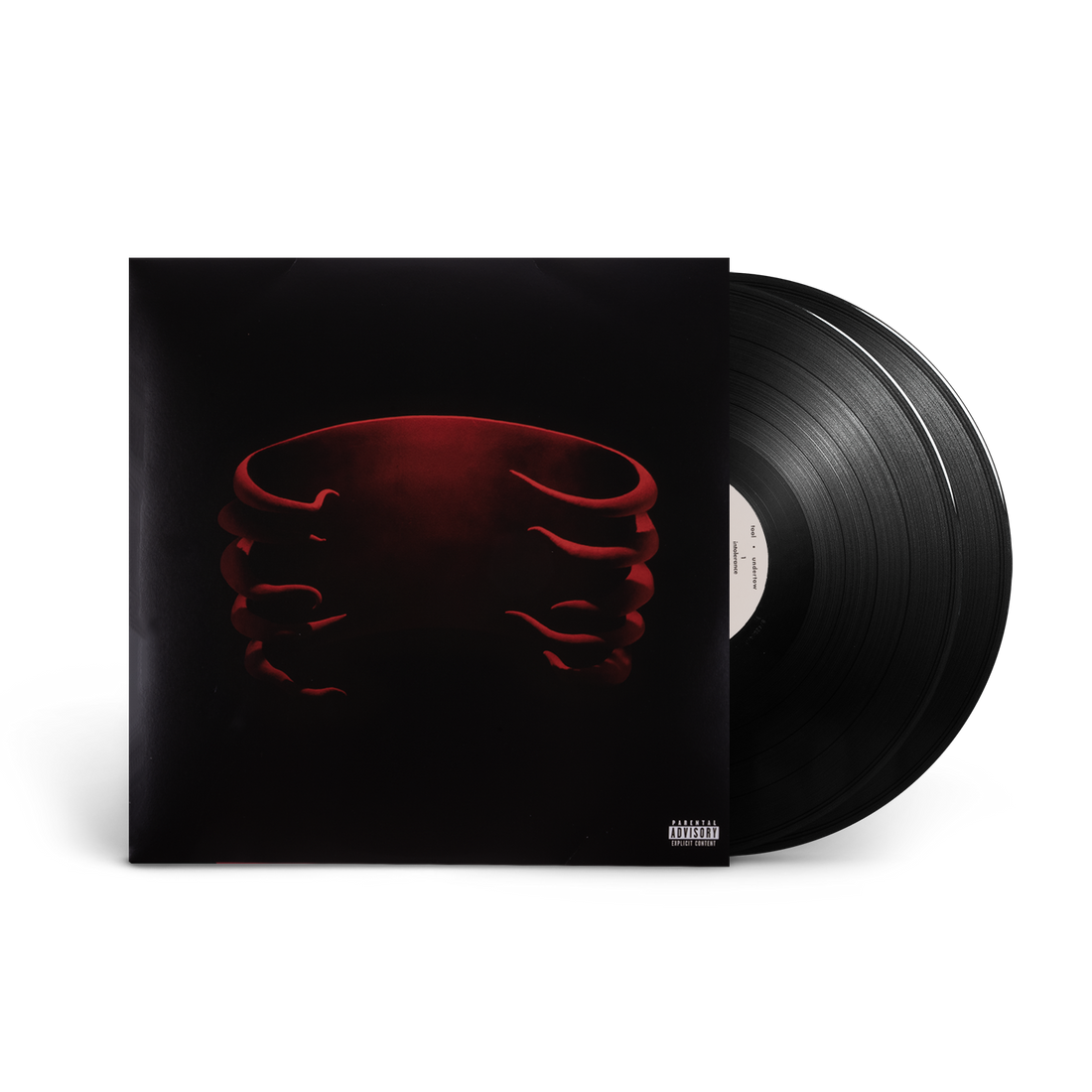
That red ribcage is a good warning. Undertow sounds like a record made inside a confined space: the bass pushes against the guitar, the drums keep shifting the floor, and Maynard James Keenan moves from an almost private voice to a full-throated accusation. Even if you arrived at Tool through their longer, later albums, there is something gripping about hearing the band this close to the ground.
Released on April 6, 1993, by Zoo Entertainment, Tool’s first full-length studio album features Keenan, guitarist Adam Jones, bassist Paul D’Amour and drummer Danny Carey. The band produced it with Sylvia Massy; Henry Rollins contributes the spoken passage in “Bottom”. D’Amour’s bass is a defining part of this particular Tool lineup. Album history and credits.
A heavy record that knows when to leave space
Start with “Intolerance”, then follow the bass rather than the vocal. It gives the record a physical centre: a low, insistent movement that the rest of the band can lean into or pull away from. Jones often makes a few notes feel enormous by letting them hang, while Carey can make a repeated pattern feel newly unstable without crowding the song.
The two familiar singles are only part of the experience. “Bottom” stretches its tension around Rollins’s voice. “Swamp Song” turns a thick groove into a trap; the title track keeps dragging its momentum forward. By “Flood”, the patient introduction feels like pressure building behind a wall. Our reading of the album is that its anger becomes most effective when the musicians hold something back.
The ten musical pieces run from “Intolerance”, “Prison Sex”, “Sober”, “Bottom”, “Crawl Away” and “Swamp Song” to “Undertow”, “4°”, “Flood” and “Disgustipated”. The last piece makes the physical format matter: many North American CDs hide it at track 69, after silent indexes. Other CDs index it differently. Those silent entries are not dozens of extra songs. The Tool FAQ documents the indexing variations.
“Sober”: a chorus that never quite releases the tension
“Sober” gives you an immediate way into the album: the bass line establishes its grip, the voice sounds exposed, and the chorus opens the room without making it feel safe. Listen to the contrast between the controlled verse and the force of the refrain. To our ears, its pull comes from that repeated attempt to get free of something that keeps returning.
The 1993 stop-motion video was directed by Fred Stuhr, with character models designed by Adam Jones. Its small figure and decaying interiors give the song an unsettling visual life of its own. The clip below is Tool’s official upload; its YouTube upload date belongs to the later online release, not the original single campaign. Video credits · Sony’s confirmation of the official uploads.
Watch “Sober” on Tool’s YouTube channel.
“Prison Sex”: the groove and the cycle beneath it
“Prison Sex” is disturbingly memorable because its rhythmic swing can catch you before the subject has registered. The song addresses the cycle of sexual abuse; the title alone gives an incomplete picture of what it is doing. Adam Jones directed the stop-motion video, whose damaged figures and enclosed spaces make the imbalance of power difficult to look away from. Song and video background.
Listen for the small spaces in the riff and for the way Keenan changes the pressure of a phrase. The quieter closing passage can feel especially uneasy after everything that precedes it. Here is the official video. The song and clip contain disturbing themes of abuse.
Watch “Prison Sex” on Tool’s YouTube channel. These are the album’s two principal commercial singles; territorial releases and radio promotion span the 1993–94 campaign.
The ribcage, the barcode and the anniversary package
Jones’s red ribcage artwork became the album’s most familiar face. The white sleeve dominated by a barcode tells another part of the story: objections to the packaging led to an alternative retail edition. For collectors, that barcode design is a distinct packaging variant. It should not automatically be described as an audio edit. Artwork history.
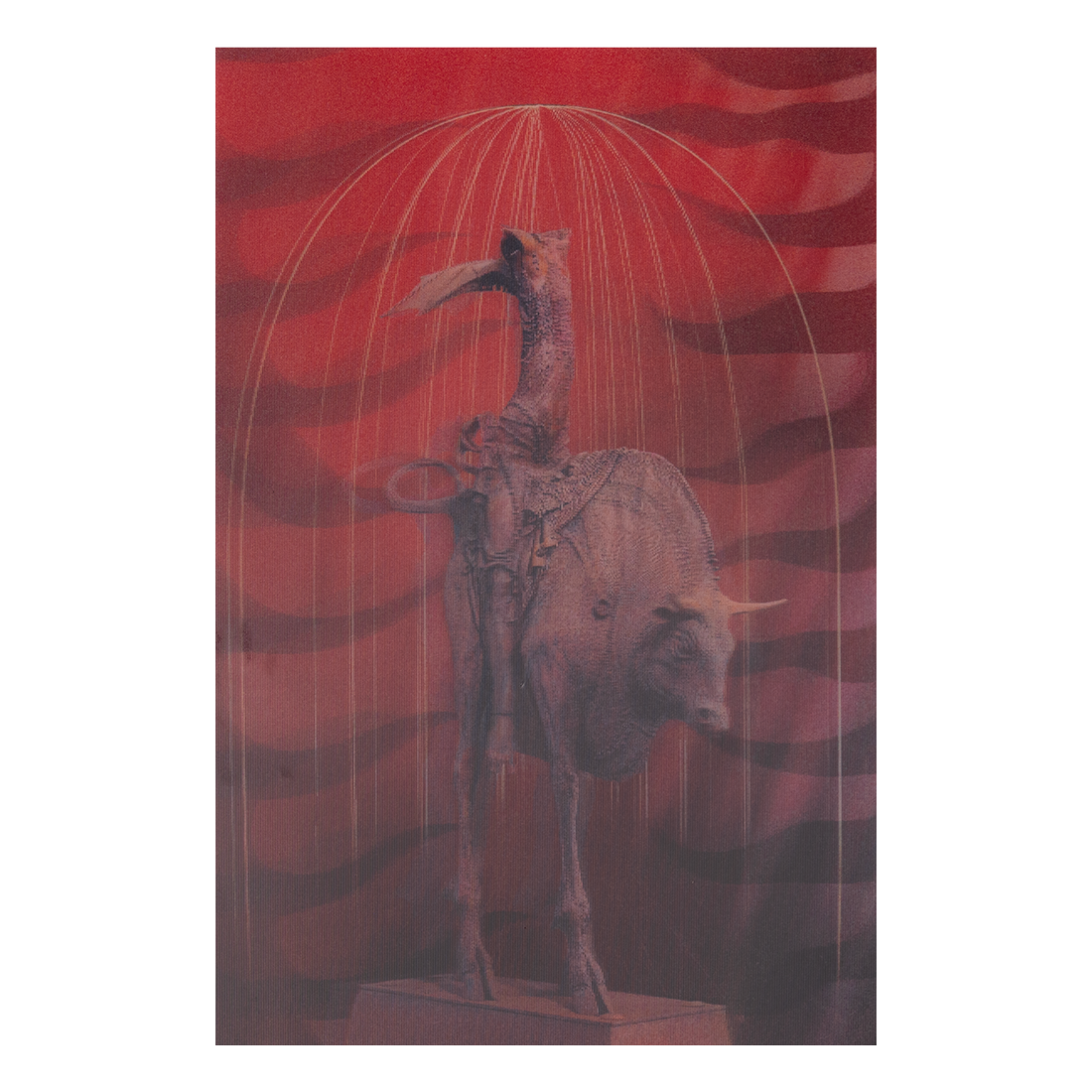
The 30th anniversary CD takes a different visual direction. The official store credits Justin Chancellor and Mackie Osborne with curating the packaging and Vahan Bego with the sculpture art. It includes an artbook, lenticular card and anniversary coin. Chancellor’s packaging credit belongs to this later edition; D’Amour plays bass on the original recording. Official deluxe-CD listing.
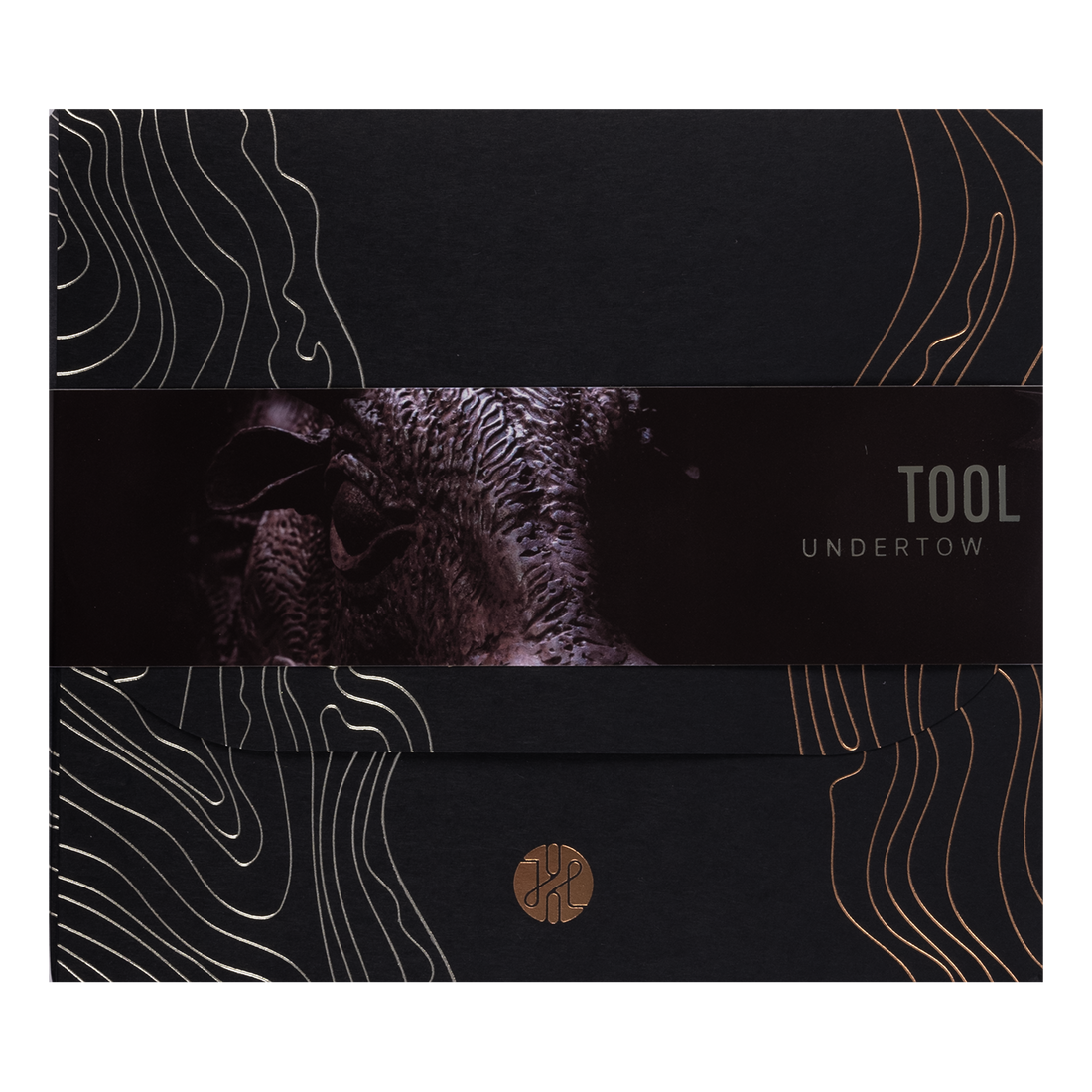
The gallery below lets you enlarge the standard artwork on the current vinyl edition and the anniversary packaging. Product photographs are credited to Tool’s official store; the images illustrate the editions discussed here.
Undertow on CD: the edition checklist
A collector’s guide needs more than one “1993 CD” entry. These are the principal documented retail, club, regional and deluxe families we could verify. Each linked entry points to its evidence. Factory matrices, SID codes, repressings and small artwork changes create further variations within them; this is not a claim to have identified every pressing worldwide.
| Period / territory | Label / catalog number | What to look for |
|---|---|---|
| 1993 · US | Zoo/BMG · 72445-11052-2 | Original retail CD |
| 1993 · US | Zoo · 72445-11073-2 | Barcode artwork |
| US | BMG Direct · D 153661 | Record-club CD |
| Canada | Columbia House · BG2-11052 | Record-club issue |
| 1993 · Europe | Zoo/BMG · 72445 11052 2 | European CD |
| US · reissue | Volcano/Tool Dissectional · 61422-31052-2 | Standard artwork |
| US · reissue | Volcano · 61422-31073-2 | Later barcode cover |
| Canada · reissues | Volcano/Tool Dissectional · 61422-33010-2 | Canadian family |
| Europe | Volcano · 0550032 | European reissue |
| Europe | Volcano/Virgin distribution · 7243 8 46690 2 7 | European CD variant |
| 1998 · UK | Music for Nations · CDMFN 246 | UK licensed issue |
| 1999 · Australia/NZ | Volcano · 0520022 | Regional reissue |
| 1993–94 · Australasia | Zoo · 72445-11052-2 | 2CD with live bonus disc |
| 2001 · Japan | Volcano · ZJCI-14006 | Japanese reissue |
| 2006 · Japan | BMG Japan · BVCQ-21070 | Japanese reissue |
| 2006/later · Europe | Volcano/Tool Dissectional/Sony · 82876536472 | Common European family |
| 2023 · tour | Tool · 30th Anniversary | Signed deluxe CD |
| 2024 · official store | Tool · TLCD010 (store SKU) | Deluxe CD sold online |
The obscure one worth investigating: the Australasian two-CD package pairs the studio album with an eight-track live bonus disc, including performances of “Undertow”, “Sober”, “Opiate”, “Flood”, “Prison Sex”, “Jerk-Off” and “Bottom”. Its catalog number can resemble a standard copy’s, so check that both discs and the correct packaging are present. MusicBrainz two-disc contents.
The signed 30th anniversary edition appeared on the 2023–24 tours; the deluxe package subsequently became available through the official store. A signature, tour provenance and complete contents are separate things to document. The store’s current description lists the original ten-piece program; it does not establish a bonus-audio edition or a newly remastered recording. Tour-edition reporting · Official package contents.
Undertow on vinyl: early single LPs and the double-album family
The early single LP is the important exception. The documented grey promotional pressing contains nine tracks and ends with “Flood”. Later standard double LPs give “Disgustipated” its own fourth side; the official store’s current LP listing confirms that sequence. Do not assume that every vinyl edition omits the final piece.
| Period / territory | Label / catalog number | What to look for |
|---|---|---|
| 1993 · US | ZP11052-1 | Grey promo · 1LP · nine tracks |
| 1993 · US | 72445-11052-1 / ZP11052-1 sleeve | Clear/clear-green · 1LP |
| 1996–97 · US | 72445-11052-1-RE | Black 2LP reissue |
| 1999-era · US | 61422-31052-1 | Transition-era labels/sleeves |
| Mid-2000s / 2006 family · US | 61422-31052-1 | Sony BMG/Volcano · black 2LP |
| 2013 · US | 61422-31052-1 | Documented black 2LP repress |
| 2017 · US | 61422-31052-1 | Documented black 2LP repress |
| 2025 · US | 61422-31052-1 | Later repress; side D correctly printed |
The early clear issue deserves a close look: surviving copies can have the grey promotional-style jacket, with a retail barcode/catalog sticker covering the promotional information. The sleeve’s spine and the sticker therefore need to be read together. Descriptions such as clear, clear-green and translucent can vary with the light; record what the copy actually looks like. Photographed early-clear release description.
The 2025 listing identifies a useful small detail: side D is correctly labeled on the rear, while some earlier reissues repeat a side-B designation there. Catalog numbers were reused across years. A printed ℗/© 1993 line identifies the recording’s copyright and is insufficient to date a physical pressing. 2025 pressing notes.
The singles belong on the shelf too
“Sober” CD single: the international configuration adds live “Bottom” and “Intolerance”. The Dutch Sober: Tales from the Darkside issue, 74321 22604 2, has nine tracks. Distinguish that official Zoo single from similarly titled unofficial live discs. Track configurations · Release catalog.
“Sober” radio promo: ZP17121-2 is documented as a US promotional CD with the edited “F*$k-Free” version. It is a different object from the ordinary album CD. Photographed promo listing.
“Sober” UK picture disc: 74321-22043-1 is a three-track 12-inch collector release. Photograph both faces and the original sleeve/sticker when identifying a copy. Picture-disc evidence.
“Prison Sex” CDs: German, UK and Australian configurations differ. Live tracks include selections from “Intolerance”, “Undertow” and “Opiate”; some versions also include the radio edit. The German CD is cataloged as 74321-19049-2. Regional track lists · German single.
“Prison Sex” vinyl and promos: a white UK 12-inch and the TOOL-002 promotional 12-inch are documented collector items. Check the track list against the specific issue rather than borrowing it from a CD single. White-vinyl example · Promo release-history reference.
What to record before calling a copy rare
Start with the format, disc count, country, label and complete catalog number. Then photograph the barcode, spine, disc labels and any inserts. For vinyl, copy the runout inscriptions from every side; for CDs, note the matrix and SID codes when present. Keep a note of signatures, stickered sleeves and missing bonus discs. Our vinyl identification guide explains the process.
Unusual color or a “promo” label alone cannot authenticate an edition. Unofficial colored pressings and copied sleeves circulate; match several identifiers with documented photographs before assigning a date or official status. The Discogs master release and MusicBrainz release group are useful starting points for the individual manufacturing variants beyond this checklist.
Then put the record on. The packaging is worth studying, but the most revealing comparison is still between the songs you thought you knew and the details you hear when you follow a different instrument. Undertow rewards that kind of return.
Edition research checked October 18, 2026. Dates are edition-specific where established; uncertain manufacturing periods are labeled as families. Cover art and official-store product photographs © their respective rights holders, reproduced here for identification and editorial discussion. Official videos are embedded from Tool’s YouTube channel.
ShelfAtlas · 3
Photo gallery
A closer look. Select an image to enlarge it.