How to make reading notes: five useful templates
Reading notes can capture a whole book or a single idea. Choose a useful format with five illustrated templates for summaries, ideas, quotes, responses and themes.
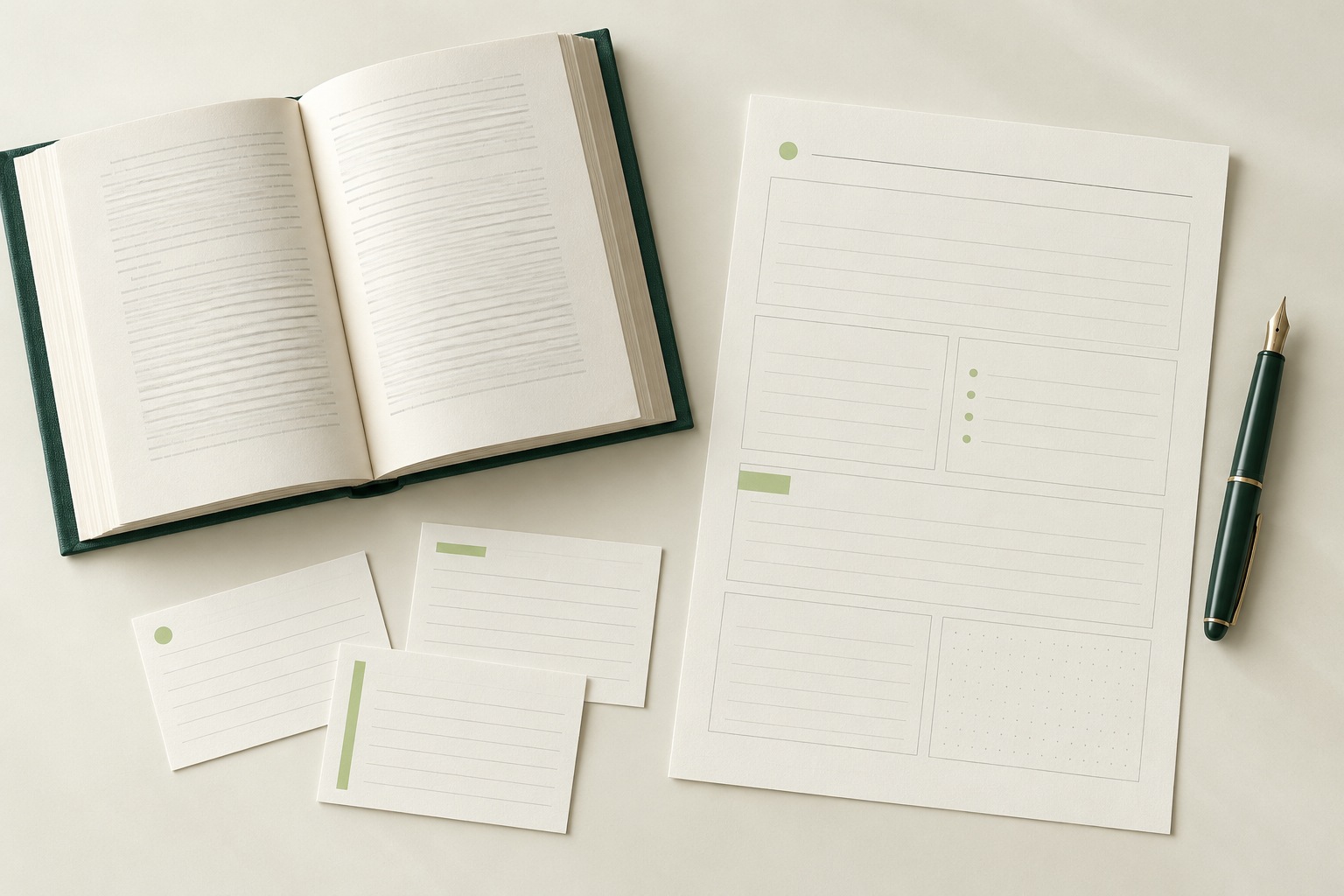
Sometimes you finish a book and want to remember the whole story. At other times, a single idea stays with you: an explanation that made sense, a question you keep returning to, or a passage you would like to find again. Reading notes can make room for any of these experiences.
You might be preparing a school assignment, getting ready for a book club or simply keeping notes for yourself. The format depends on what you want to return to later. This guide offers five practical templates that you can adapt and combine.
Start with the purpose of the note
Before choosing headings, decide what you want to keep: an overview of the book, one idea, a few quotes, your interpretation of a passage or a theme that appears in several places. For a school assignment, start with your teacher’s instructions.
These formats can overlap. A note about one idea might include a quote and your response; thematic notes can draw on a single book or several sources. Choose the fields that help you preserve what matters.
1. The whole-book summary: an overview of your reading
This is the format many readers first meet at school. It brings together the book’s details, a summary, important characters or ideas, selected quotes and your response. It is useful when you want to remember what you read or prepare a discussion of the whole work.
For a novel, follow the opening situation, the central conflict, the events that change the story and the ending. Write the summary in your own words. Try explaining what happened with the book closed, then check the names and sequence of events.
Connect character traits to actions and choices. If you describe a character as proud, point to where they refuse help and what follows from that decision. For nonfiction, adapt the template to the central question, the author’s arguments and supporting examples. For poetry, you may focus more on imagery, the poetic voice and your response to the text.
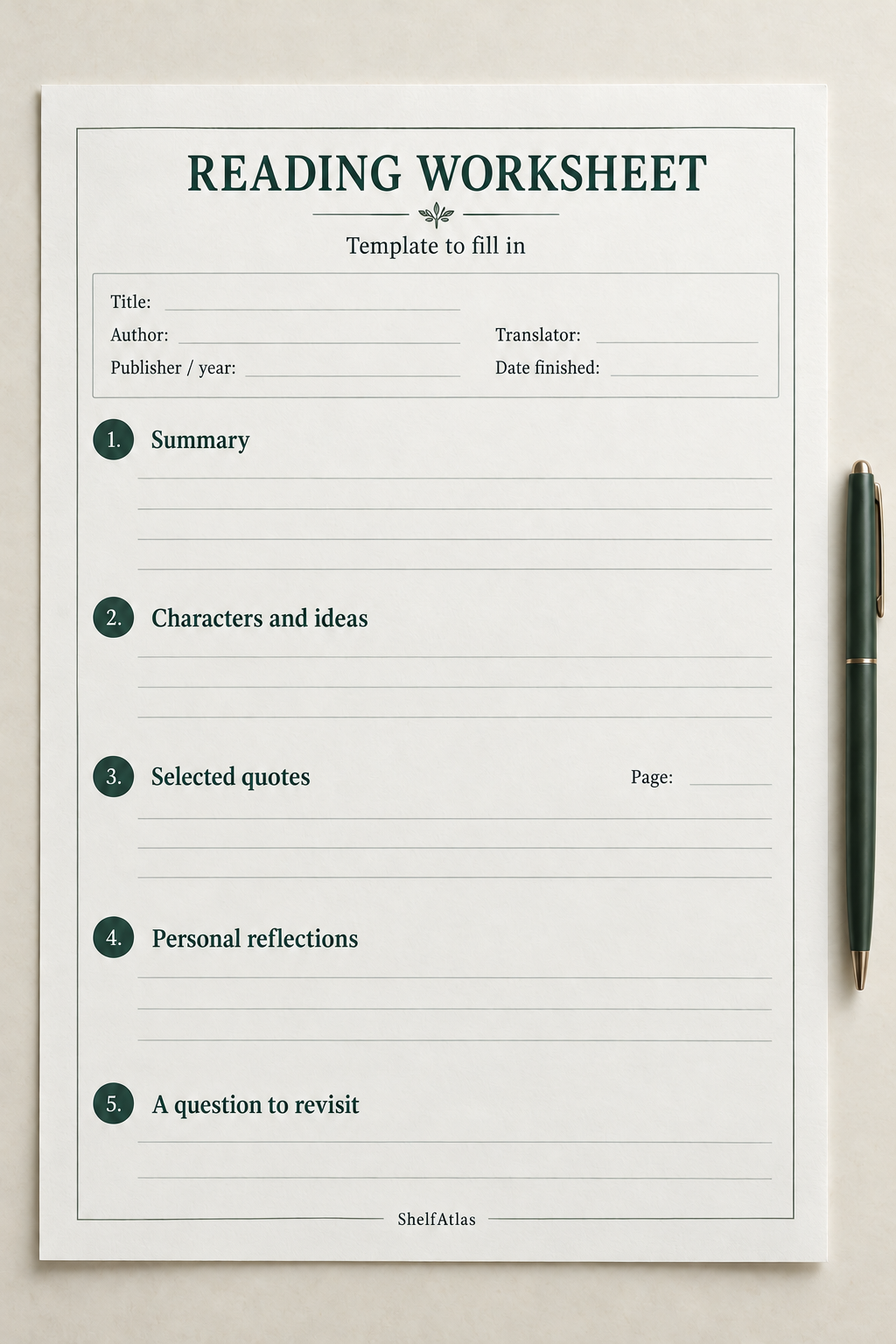
Useful starting fields: title and author; edition; summary; characters or arguments; themes; quotes with pages; your response; a question to revisit. If you share your notes with other readers, mark any section that reveals the ending.
2. The idea note: one point worth keeping
An idea note can be only a few lines long. Choose one idea, explain it in your own words and keep a reference to where you found it. You can make several notes from the same book, each with a different focus.
Give the note a precise title. Instead of a broad word such as “memory”, you might name the point you want to explore: “How memories change a decision”. Then explain the idea and its context so that it still makes sense months later.
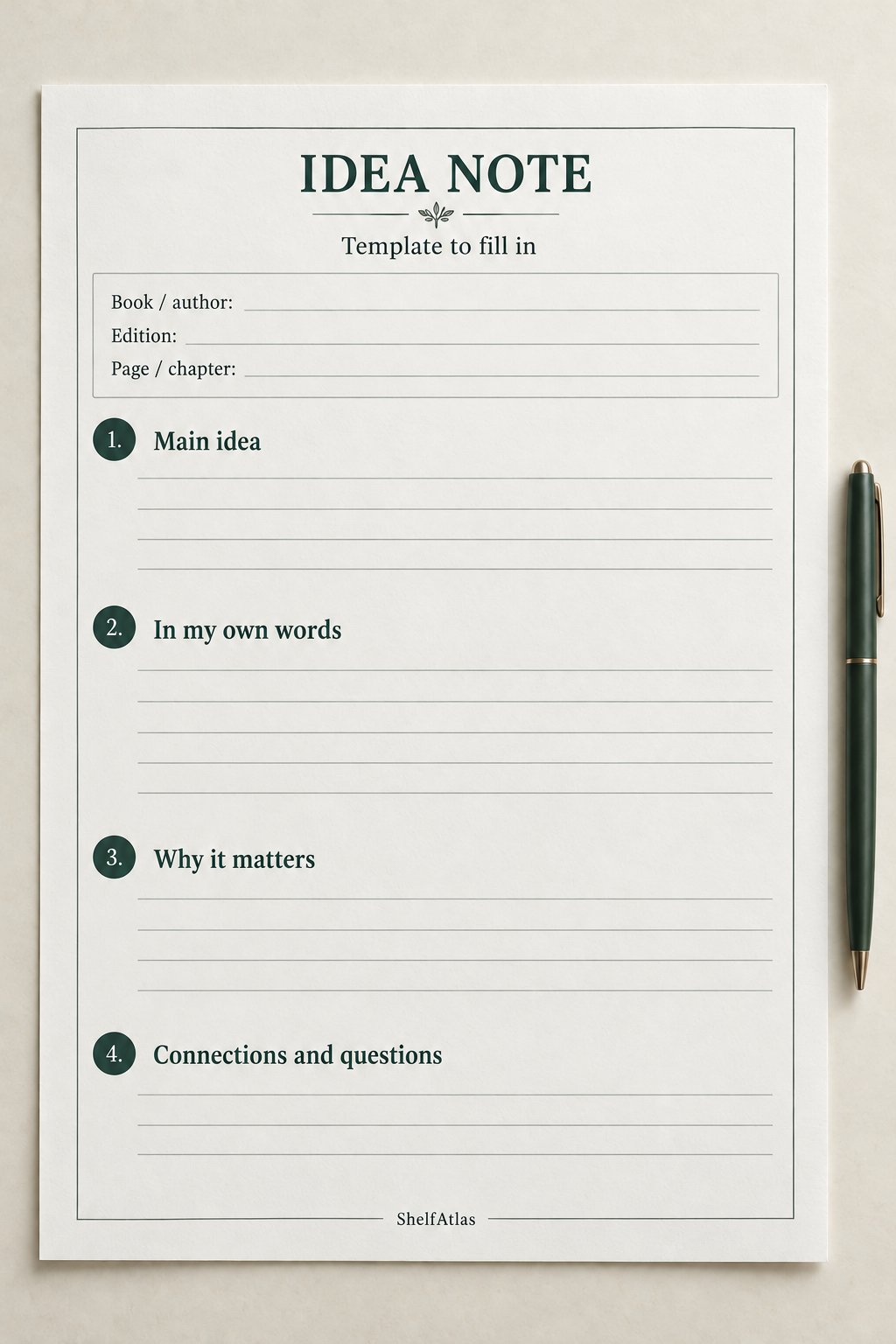
- Idea title: what you want to find again.
- Source: book, author, edition and page or chapter.
- Explanation: the idea from the text, expressed in your own words.
- Your response: why it matters and what it connects to.
Keep a clear distinction between the author’s claim and your own conclusion. A paraphrase should preserve the meaning of the original passage.
3. Quote notes: words you want to preserve exactly
Here you collect passages you want to be able to find in their original wording. Copy each passage accurately, use quotation marks and record its source alongside it. You can keep one quote per note or group a few related passages, each with its own page reference.
Add a sentence about the context: who is speaking, what is being discussed or why the passage matters. A quote taken out of context can suggest something different from its meaning in the book.
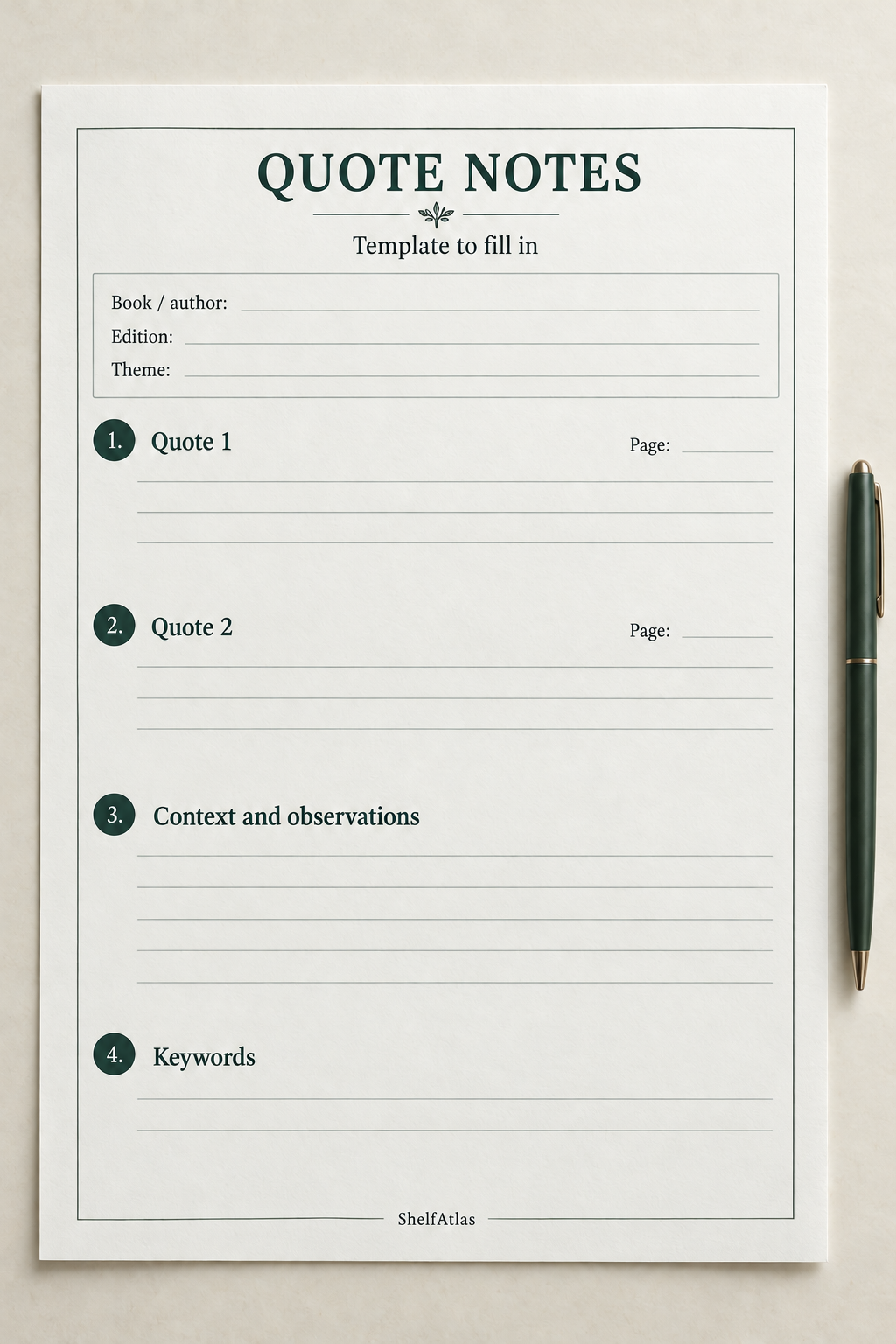
Record the page together with the edition. For an ebook, you can use a chapter or the location shown in the reading app. If you translate a passage yourself, label the translation and keep the original wording too.
4. The response note: your interpretation and questions
A response note follows what you make of a passage, scene or argument. You might explain an interpretation, raise an objection or keep a question that remains open.
A response becomes clearer when it is supported by the text. For example, you might write: “The ending felt rushed because the relationship between the characters changes suddenly after a carefully developed conflict.” Add the scene that led you to that view.
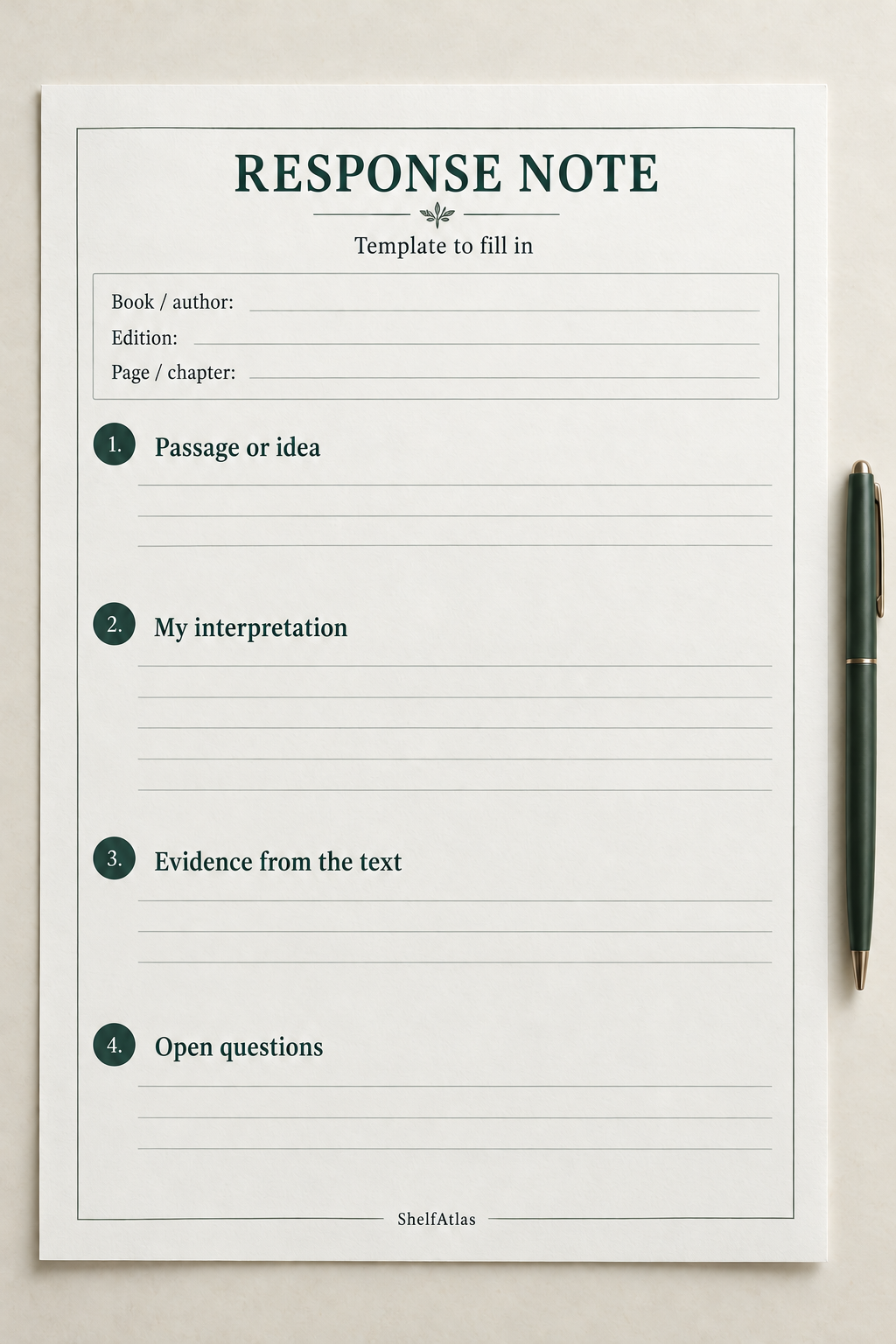
Your reaction can be mixed. You may enjoy the style while finding the story less convincing, or find a strong argument in a book you disagree with overall. Those distinctions are worth keeping.
5. Thematic notes: follow a subject across passages
Choose a theme or a question, then gather relevant material. You could follow how friendship appears in a novel, compare the portrayal of a city in several books or look at how two authors approach the same problem.
For each passage, record the source, page and idea or quote. Then look at what the passages share and where they differ. Thematic notes can bring together material from one book or compare several readings.
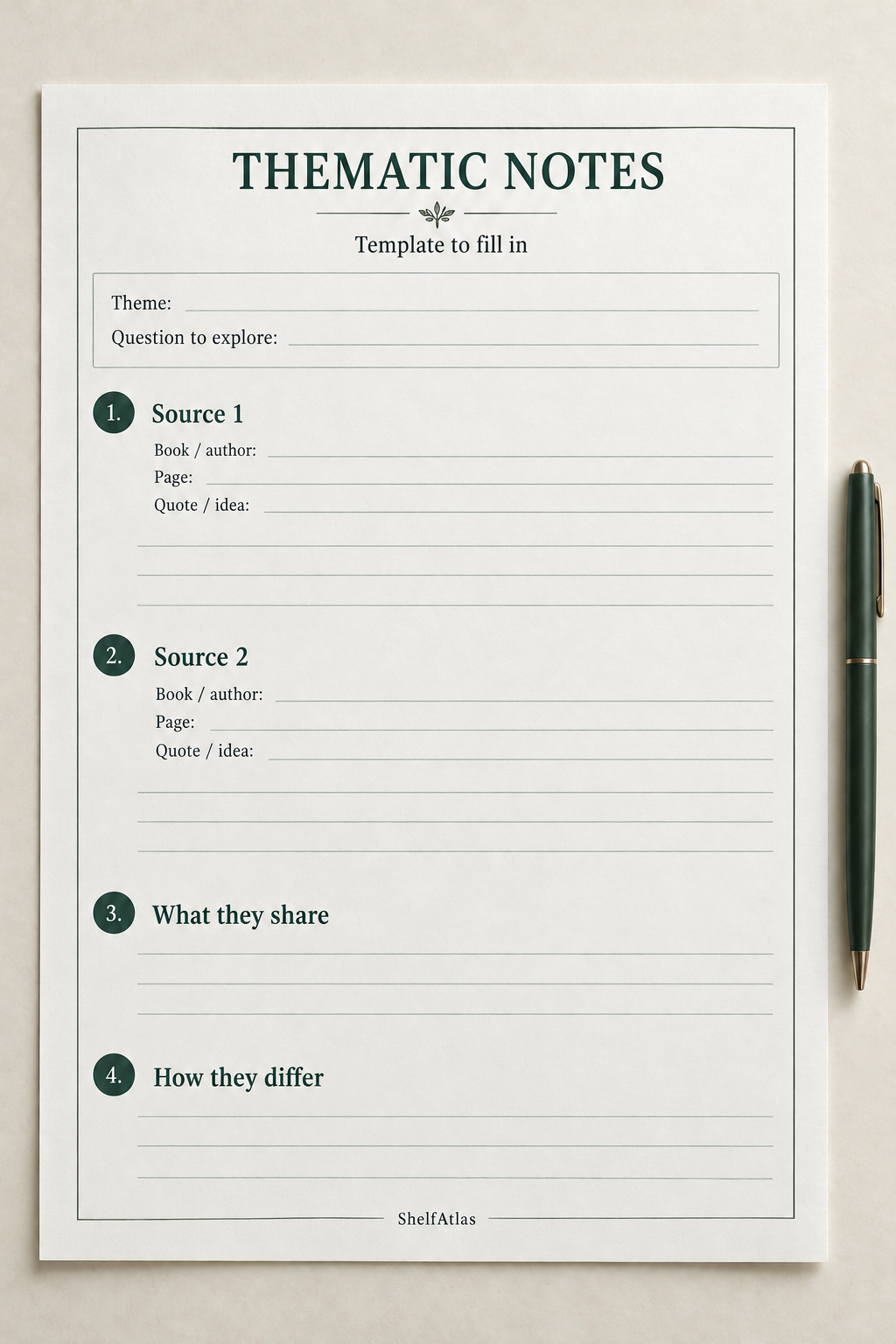
The use of thematic notes to gather quotes and ideas also appears in the Romanian methodological guide for language and literature, grades IX–XII. The templates in this article are practical suggestions that you can adapt to your purpose.
Source details help you return to the text
Keep the author, title and the edition you read: publisher, year and translator where relevant. An ISBN can help identify the exact edition in your library. The year of first publication and the year of your edition are different details; label them separately if you include both.
On shorter notes, you can use a book identifier if the full details are kept in a catalog or a separate list. What matters is being able to reconstruct the source and locate the passage without guessing.
A simple habit during and after reading
As you read, jot down short pointers: a page, a question or a reaction. After a chapter or after finishing the book, choose what is worth keeping and give it a useful form. One idea may fit on a small card; a discussion of the whole book may need more room.
Read the note again. Check names, pages and quotes, and see whether the observation makes sense without the book open beside it. A date and a few keywords can help you find notes once they begin to accumulate.
You do not have to complete every template for every book. Sometimes you keep a summary. At other times, three ideas and a question are enough. Choose what helps you continue thinking about a book after you have put it back on the shelf.
Original illustrations generated with AI for ShelfAtlas.